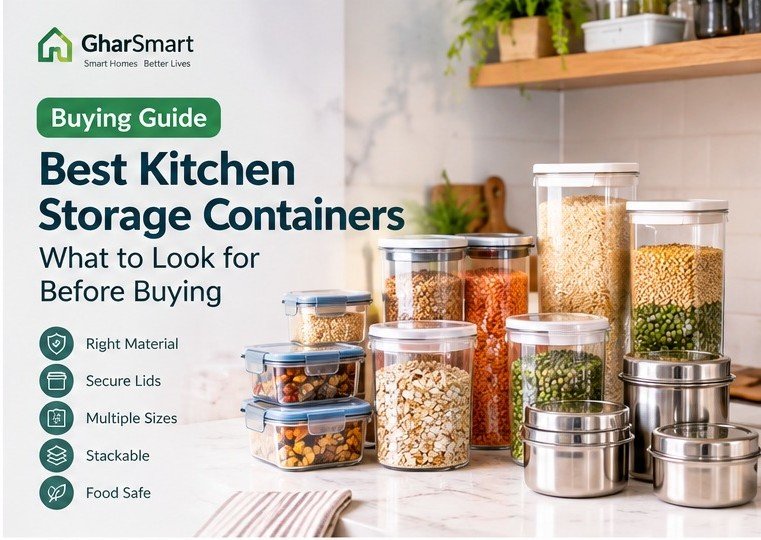
Best Kitchen Storage Containers: What to Look for Before Buying
Good kitchen storage containers can help keep food organized, protect ingredients from moisture, and make your kitchen easier to manage.
But with so many materials, sizes, shapes, and lid designs available, choosing the right containers can be confusing.
Before buying kitchen storage containers, it is worth considering how you plan to use them, how much space you have, and which features actually matter.
1. Choose the Right Material
Kitchen storage containers are commonly available in plastic, glass, and stainless steel.
Glass Containers
Glass containers can be useful for storing many types of food and are generally easy to clean. They can also be convenient for reheating when the particular container is designed and rated for that purpose.
Plastic Containers
Plastic containers are lightweight and easy to handle. When choosing plastic, check the manufacturer's information to confirm that the product is intended for food storage.
If you plan to use the container in a microwave, freezer, or dishwasher, check that the particular product is designed for that use.
Stainless Steel Containers
Stainless steel containers are durable and can be useful for everyday dry storage.
Because they are usually opaque, however, you may need labels to identify the contents quickly.
2. Check the Lid Design
The lid is just as important as the container itself.
Look for lids that fit securely and are easy to open and close. If you plan to store liquids or foods with strong smells, a secure seal can be particularly useful.
A container with a complicated lid may become inconvenient if you use it every day.
3. Choose Practical Sizes
A useful container set should offer different sizes for different storage needs.
For example:
- Small containers for spices and small ingredients
- Medium containers for snacks and pulses
- Larger containers for rice, flour, and other staples
Choose sizes according to what you actually store rather than buying a large set simply because it contains more pieces.
4. Consider Stackability
If you have limited cabinet space, stackable containers can be extremely useful.
Look for containers with similar shapes and stable lids that can be stacked safely.
Square or rectangular containers can sometimes make better use of cabinet space than irregularly shaped containers.
For more ideas on making the most of your kitchen space, read our guide on how to organize a small kitchen.
5. Check Cleaning Requirements
Containers that are difficult to clean can become frustrating over time.
Before buying, check the manufacturer's cleaning instructions. Pay attention to lids, seals, grooves, and corners where food can collect.
If convenience is important to you, choose a design that fits your normal cleaning routine.
6. Check Whether the Material Is Food-Safe
Always check the manufacturer's information to confirm that the container is intended for food storage.
Don't assume that every container is suitable for:
- Microwave use
- Freezer storage
- Dishwasher cleaning
- Hot food
- High temperatures
Follow the manufacturer's instructions for the specific product.
7. Think About What You Store
The best storage container depends on the food you want to store.
Dry kitchen staples such as rice, flour, pulses, sugar, and cereals may benefit from containers with secure lids and suitable capacity.
Smaller containers may be more practical for leftovers, snacks, or smaller quantities.
Think about your actual kitchen routine before choosing the sizes.
8. Consider Transparent Containers
Transparent containers allow you to see the contents without opening them.
This can be especially useful for dry ingredients that you use frequently.
If you prefer opaque containers, simple labels can make identifying ingredients easier.
9. Don't Buy More Than You Need
A large container set may look like a great deal, but unused containers can create more clutter.
Before buying, consider:
- How much cabinet space you have
- Which ingredients you regularly store
- Which sizes you actually need
- How many containers you already own
Buying according to your needs is usually more practical.
10. Compare Features Before Price
Price is important, but it shouldn't be the only deciding factor.
Compare:
- Material
- Container sizes
- Number of pieces
- Lid design
- Stackability
- Cleaning requirements
- Intended use
- Manufacturer information
A slightly more expensive product may offer better value if it is more suitable for your everyday needs.
Kitchen Storage Container Buying Checklist
Before purchasing, ask yourself:
✓ Is the material suitable for my intended use?
✓ Does the lid fit securely?
✓ Are the sizes suitable for my kitchen?
✓ Will the containers fit inside my cabinets?
✓ Are they easy to clean?
✓ Are they suitable for the appliances or temperatures I intend to use them with?
Final Thoughts
The best kitchen storage containers aren't necessarily the most expensive ones. The right choice depends on your kitchen space, storage habits, food items, and everyday requirements.
If your main problem is limited kitchen space, start by reading our 10 simple kitchen organization ideas.
And if you need a complete plan for a compact kitchen, our small kitchen organization guide can help.
GharSmart Tip: Organize your existing containers first. Then buy only the storage products that solve a specific problem in your kitchen.