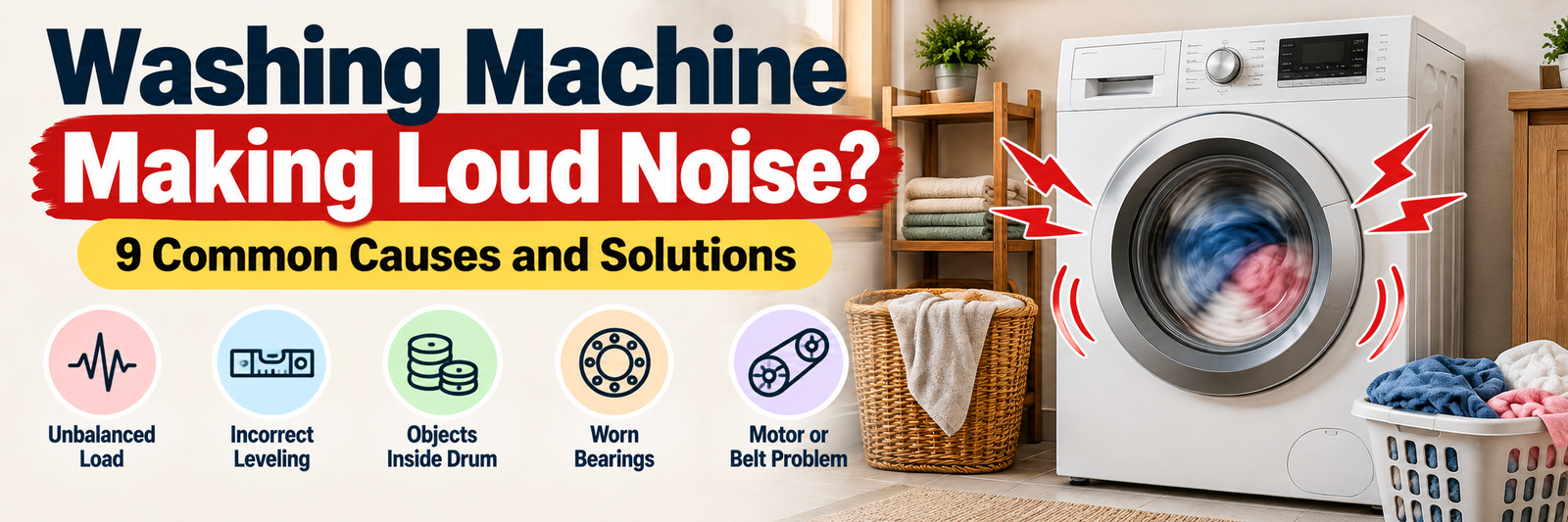
Washing Machine Making Loud Noise? 9 Common Causes and Solutions
Is your washing machine making loud noise during washing, rinsing, or spinning? A washing machine can make unusual sounds because of an unbalanced load, incorrect leveling, trapped objects, worn bearings, or other mechanical problems. Some noises are easy to fix at home, while grinding, repeated banging, or severe vibration may require professional inspection.
In this guide, we’ll explain 9 common reasons why a washing machine makes loud noises, what different sounds may indicate, and what you can safely check before calling a technician.
Why Is My Washing Machine Making Loud Noise?
Quick Answer: A washing machine may make loud noises because of an unbalanced laundry load, trapped objects, incorrect leveling, worn bearings, or suspension problems. If the noise occurs mainly during spinning, first check the load distribution and whether the machine is stable. Persistent grinding, metallic sounds, or severe vibration should be professionally inspected.
Washing Machine Noise Troubleshooting: Quick Guide
| Problem | Possible Cause | What to Check |
|---|---|---|
| Loud banging during spin | Unbalanced load | Redistribute the laundry |
| Excessive vibration | Machine not level | Feet and floor stability |
| Rattling or clicking | Coins or small objects | Pockets, drum, and accessible areas |
| Grinding noise | Bearing or mechanical problem | Professional inspection |
| Noise while draining | Drain pump obstruction | Accessible drain filter |
| Loud spinning noise | Bearing or suspension problem | Professional diagnosis |
| New machine vibrating badly | Shipping bolts | Installation instructions |
1. Unbalanced Laundry Load
An unbalanced load is one of the most common reasons a washing machine makes a loud banging noise during the spin cycle.
Heavy towels, bedsheets, blankets, or other bulky items can collect on one side of the drum. When the drum begins spinning at high speed, the uneven weight distribution can cause excessive vibration and banging.
How to Fix It
- Pause the washing cycle safely.
- Wait until the drum completely stops.
- Open the door or lid only when it unlocks.
- Redistribute the clothes evenly.
- Remove some items if the machine is overloaded.
- Restart the spin cycle.
Avoid washing a single heavy item unless your washing machine manufacturer specifically allows it. If your machine also refuses to spin, read our Washing Machine Not Spinning Guide for additional troubleshooting steps.
2. Washing Machine Is Not Properly Leveled
A washing machine must sit firmly and evenly on the floor. If one or more feet are incorrectly adjusted, the appliance may rock or vibrate during operation. The problem becomes especially noticeable during high-speed spinning.
How to Fix It
Check whether the washing machine rocks when gently pressed at the corners while it is switched off. Follow the manufacturer's instructions for adjusting the leveling feet.
Make sure:
- All feet make proper contact with the floor.
- The washing machine is installed on a stable surface.
- The appliance does not rock from side to side.
Avoid placing random pieces of wood, cardboard, or other unsuitable materials underneath the washing machine.
3. Coins or Small Objects Inside the Washing Machine
Coins, hairpins, buttons, keys, and other small objects left inside clothing pockets may cause rattling or clicking sounds. Some objects can become trapped in accessible areas around the drum or door gasket.
How to Fix It
Stop the washing machine safely and disconnect the power before checking accessible areas.
Inspect:
- Clothing pockets
- Inside the drum
- Door gasket, if applicable
- Accessible filter areas described in your manual
Remove only objects that can be reached safely. Never dismantle internal washing machine components simply to retrieve an object.
4. Shipping Bolts Have Not Been Removed
This problem is particularly important if your new washing machine is making loud noise or vibrating excessively. Many front-load washing machines use shipping or transit bolts to secure the drum during transportation. These bolts normally need to be removed during installation. If they remain installed, the washing machine may shake or vibrate severely during operation.
How to Fix It
- Check your washing machine's installation manual.
- Confirm whether all required shipping bolts were removed during installation.
- If you are unsure, contact the installer or manufacturer's customer support.
- Avoid repeatedly operating a newly installed washing machine that is vibrating severely.
5. Worn Drum Bearings
Drum bearings help the washing machine drum rotate smoothly. When bearings become worn or damaged, you may hear a rumbling, grinding, or roaring noise. The sound may become significantly louder during the spin cycle.
How to Fix It
- Bearing replacement generally requires substantial disassembly of the washing machine.
- If you suspect damaged bearings, stop using the appliance and arrange professional inspection.
- Continuing to operate a washing machine with a serious bearing problem may contribute to additional damage.
6. Suspension or Shock Absorber Problems
Washing machines use suspension components to control movement of the drum or tub. Depending on the design, these may include springs, suspension rods, or shock absorbers. When these components become worn or damaged, the drum may move excessively during spinning.
This can result in:
- Loud banging
- Excessive vibration
- Machine movement
- Drum hitting the cabinet
How to Fix It
- First check the laundry load and machine leveling.
- If the machine continues to bang even with a balanced load, arrange professional inspection.
- Suspension-system repairs usually require access to internal components.
7. Drain Pump Obstruction
Does the unusual noise happen mainly when your washing machine is draining water? The drain pump may be involved. Coins, small objects, lint, or other debris can sometimes enter user-accessible filter areas or interfere with drainage.
How to Fix It
Follow your washing machine manufacturer's instructions for checking the drain filter. Before opening any user-accessible filter:
- Switch off the washing machine.
- Unplug it.
- Follow the manufacturer's drainage procedure.
- Be prepared for residual water.
Do not dismantle the drain pump yourself. If your machine is also leaving water inside the drum, read our Washing Machine Not Draining Water Guide.
8. Loose or Damaged Internal Components
Repeated vibration and normal wear can sometimes result in loose or damaged internal components. Depending on the washing machine design, several mechanical parts may produce rattling, knocking, or scraping noises when damaged.
How to Fix It
- Do not remove the washing machine's outer panels unless you are qualified to repair appliances.
- If checking the load, leveling, and accessible areas does not solve the problem, arrange professional servicing.
- This is particularly important when the sound becomes progressively worse.
9. Motor or Drive-System Problems
Some washing machines use belts, pulleys, motors, and other drive components to rotate the drum. Other models use direct-drive systems. Problems in these components may produce:
- Squealing sounds
- Grinding noises
- Clicking
- Poor spinning performance
- Irregular drum movement
How to Fix It
- If unusual mechanical noises continue throughout different washing loads, stop using the machine and arrange professional diagnosis.
- Avoid attempting internal motor or drive-system repairs yourself.
Why Is My Washing Machine So Loud During the Spin Cycle?
The spin cycle operates at much higher speeds than normal washing. Because of this, problems such as an unbalanced load, incorrect leveling, worn bearings, or damaged suspension components often become more noticeable during spinning.
Start with the easiest checks:
- Make sure the drum is not overloaded.
- Redistribute the laundry.
- Check whether the machine is stable.
- Confirm that shipping bolts were removed if the appliance is new.
If your washing machine is not spinning at all, the cause may be different. See our Washing Machine Not Spinning troubleshooting guide.
What Do Different Washing Machine Noises Mean?
Different sounds can sometimes provide clues about the problem.
Banging Noise
Often associated with an unbalanced load, incorrect leveling, or suspension problems.
Rattling Noise
May be caused by coins, buttons, or other loose objects.
Grinding Noise
May indicate bearing, motor, or other mechanical problems and should not be ignored if persistent.
Humming During Draining
The drain pump normally makes some operating sound, but an unusually loud or abnormal noise may indicate an obstruction or pump problem.
Squealing Noise
Depending on the machine design, this may be associated with drive-system components or another mechanical issue. A sound alone cannot reliably diagnose an internal fault, so persistent abnormal noises should be professionally inspected.
How to Prevent Washing Machine Noise and Vibration
A few simple habits can help prevent unnecessary noise.
1. Don't Overload the Machine
Follow the manufacturer's recommended load capacity.
2. Check Clothing Pockets
Remove coins, keys, clips, and other objects before washing.
3. Distribute Heavy Laundry Properly
Avoid putting a single heavy item into the drum unless permitted by the manufacturer.
4. Keep the Machine Level
Check the appliance if it begins rocking or moving during operation.
5. Maintain Accessible Filters
Clean user-serviceable filters according to your washing machine's maintenance instructions.
6. Don't Ignore New Noises
If your washing machine suddenly develops a grinding, scraping, or heavy banging sound, investigate it rather than continuing to use the appliance.
When Should You Call a Washing Machine Technician?
Basic problems such as an unbalanced load or loose object may be easy to resolve. Professional inspection is recommended when:
- The machine produces persistent grinding noises.
- The drum repeatedly hits the cabinet.
- Severe vibration continues after leveling.
- You suspect damaged bearings.
- The machine leaks while making unusual noises.
- The motor or drum does not operate normally.
- You notice a burning smell or electrical problem.
Switch off and unplug the appliance if there are signs of an electrical fault.
Should You Repair or Replace a Noisy Washing Machine?
A noisy washing machine does not automatically need replacing. If the problem involves load distribution, leveling, or an accessible obstruction, the solution may be simple. For mechanical faults, consider:
- Age of the washing machine
- Warranty coverage
- Cost of replacement parts
- Estimated repair cost
- Frequency of previous repairs
- Overall condition of the appliance
For an older machine requiring an expensive motor, drum, or bearing repair, comparing replacement options may be worthwhile. If we later publish a dedicated GharSmart washing machine buying guide, it can be naturally linked here.
Frequently Asked Questions
Why is my washing machine making a loud banging noise?
An unbalanced laundry load, incorrect leveling, or worn suspension components may cause loud banging. Start by redistributing the clothes and checking whether the machine is stable.
Why is my washing machine making loud noise during spinning?
High-speed spinning makes imbalance and mechanical problems more noticeable. Possible causes include an uneven load, incorrect leveling, worn bearings, or suspension problems.
Can overloading make a washing machine noisy?
Yes. Overloading can interfere with normal drum movement and may increase vibration during spinning.
Why is my washing machine making a grinding noise?
Persistent grinding may indicate worn bearings, trapped objects, or another mechanical problem. Stop using the appliance and arrange inspection if the sound continues.
Why does my washing machine make noise while draining?
A foreign object in an accessible drain-filter area or a drain-pump problem may cause unusual sounds during draining.
Why is my new washing machine shaking violently?
If the appliance is newly installed, check its leveling and confirm that all required shipping bolts have been removed according to the installation manual.
Should I continue using a noisy washing machine?
Normal operating sounds are expected, but severe banging, metallic grinding, burning smells, or excessive vibration should not be ignored. Stop using the appliance if you suspect a mechanical or electrical fault.
Final Thoughts
A washing machine making loud noise can have a simple cause such as an unbalanced load or incorrect leveling, but persistent grinding, banging, or severe vibration may indicate a mechanical problem. Start with safe external checks: redistribute the laundry, check the machine's stability, inspect accessible areas for loose objects, and follow the manufacturer's maintenance instructions. If the unusual noise continues, professional inspection can help identify the problem before further damage occurs.