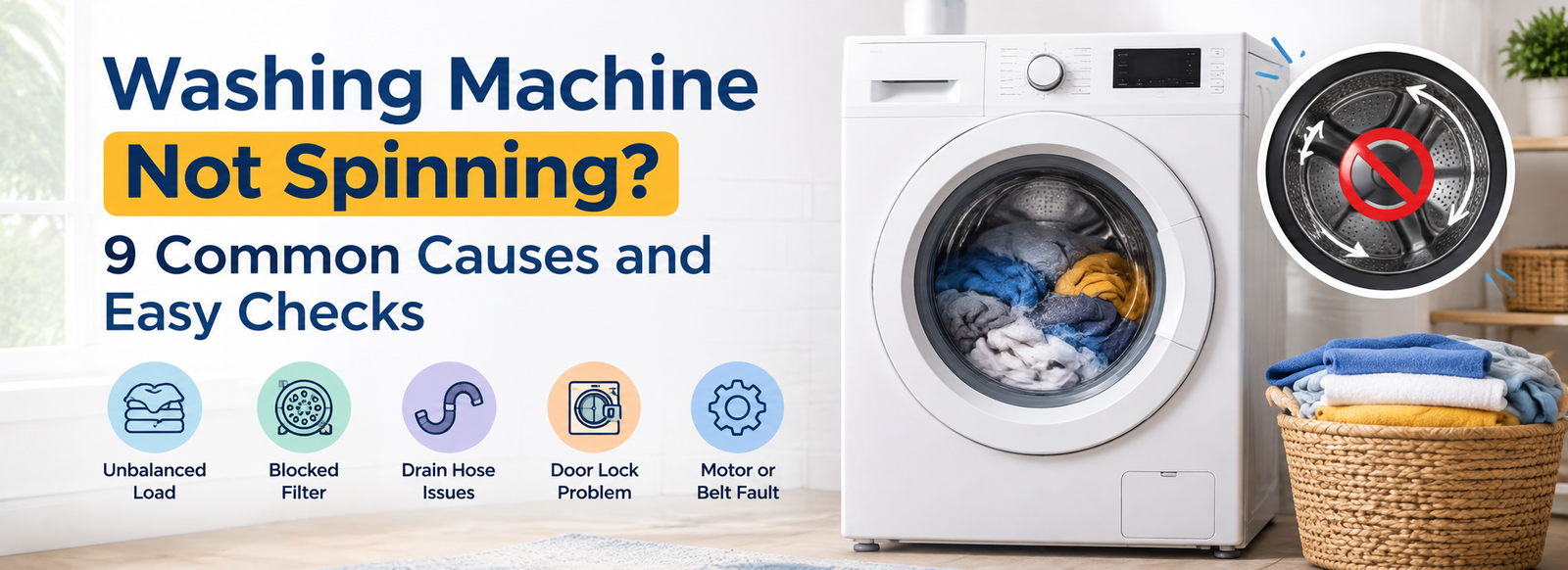
Washing Machine Not Spinning? 9 Common Causes and Easy Checks
Is your washing machine washing clothes but not spinning them properly? Or is the drum stopping before the spin cycle begins?
A washing machine may fail to spin for several reasons. Sometimes the cause is simple, such as an unbalanced load or excess water remaining inside the drum. In other cases, there may be a problem with the door lock, drain system, motor or another internal component.
Before calling a technician, there are several safe checks you can perform at home.
Why Is My Washing Machine Not Spinning?
Common causes include:
- Unbalanced clothes inside the drum
- Too many clothes in the machine
- Water not draining properly
- A blocked drain filter
- A problem with the door lock
- Incorrect wash-cycle settings
- Excessive detergent or foam
- Motor or belt problems
- An electronic or control issue
Let's look at each possibility.
1. Check Whether Water Is Still Inside the Drum
This is one of the most important things to check.
Many washing machines will not start the normal spin cycle if water has not drained from the drum.
If you can see water inside the machine after the wash cycle, first investigate the drainage system.
You can read our detailed guide:
[Washing Machine पानी Drain नहीं कर रही]
This article explains how to check the drain hose, drain filter and other common causes of drainage problems.
2. Check the Clothes Inside the Drum
An unbalanced load is a common reason for a washing machine to stop or reduce spinning speed.
For example, if one heavy blanket or towel moves to one side of the drum, the machine may detect an imbalance.
Try this:
- Stop the machine.
- Open the door when it is safe to do so.
- Spread the clothes evenly around the drum.
- Remove some clothes if the drum is overloaded.
- Try the spin cycle again.
3. Avoid Overloading the Washing Machine
Putting too many clothes into the drum can make it difficult for the machine to spin correctly.
Overloading can also place additional stress on the washing machine's mechanical components.
Always follow the load capacity mentioned in your appliance manual.
Remember that bulky items such as blankets and towels can behave differently from lightweight clothes.
4. Check the Drain Filter
A blocked drain filter can cause both drainage and spinning problems.
If the washing machine cannot remove the water, it may not allow the spin cycle to start.
To check the filter:
- Turn off the washing machine.
- Unplug it.
- Keep towels or a shallow container nearby.
- Open the drain-filter cover.
- Remove and clean the filter according to the manufacturer's instructions.
- Check for coins, lint, hair or other small objects.
- Reinstall the filter securely.
Never force a filter if it is stuck.
5. Check the Drain Hose
A kinked or blocked drain hose can prevent proper drainage.
Look behind the washing machine and check whether the hose is:
- Bent
- Crushed
- Kinked
- Blocked
- Incorrectly positioned
Correct the hose position if necessary, but do not disconnect internal plumbing unless you know what you are doing.
6. Check the Door or Lid
Front-load washing machines normally need the door to lock properly before the spin cycle can begin.
If the door is not closing or locking correctly, the machine may refuse to spin.
Check for:
- Clothes caught between the door and seal
- Dirt around the door-lock area
- A door that does not close properly
- A door-lock error on the display
Do not try to bypass or disable a safety door lock.
7. Check the Selected Program
Some washing programs use a low spin speed or may have spin disabled.
Check the control panel and make sure the selected program has an appropriate spin setting.
If your machine has a separate Spin or Spin + Drain program, you can try it after checking that the drum is not overloaded.
8. Too Much Detergent Can Cause Excess Foam
Using too much detergent may create excessive foam.
Excessive foam can interfere with the normal operation of some washing machines and may affect the cycle.
Use the recommended amount of detergent for your machine and laundry load.
9. Motor, Belt or Other Internal Problem
If the washing machine fills, washes and drains but still refuses to spin, there may be an internal mechanical or electrical problem.
Possible causes can include:
- Worn or damaged drive components
- Motor problems
- Belt problems in applicable models
- Motor-control issues
- Door-lock faults
- Electronic control problems
The exact design varies between washing machine models.
If the machine makes unusual sounds, smells like burning, trips the electrical supply or repeatedly stops during spinning, stop using it and arrange a professional inspection.
What to Do When Washing Machine Is Not Spinning
Here is a quick checklist:
Step 1: Check whether water is still inside.
Step 2: Check the drain filter.
Step 3: Inspect the drain hose for kinks.
Step 4: Redistribute the clothes.
Step 5: Remove some clothes if the machine is overloaded.
Step 6: Check that the door or lid closes properly.
Step 7: Check the spin setting.
Step 8: Try a separate Spin or Spin + Drain cycle.
If the machine still does not spin, professional diagnosis may be required.
When Should You Call a Technician?
Contact a qualified appliance technician if:
- The machine repeatedly refuses to spin.
- The motor makes unusual noises.
- You smell burning.
- The machine trips the electrical supply.
- The drum does not move at all.
- An error code keeps appearing.
- The machine leaks water.
- The problem continues after basic checks.
Avoid opening the electrical or motor compartment yourself unless you have the necessary knowledge and tools.
How to Prevent Washing Machine Spin Problems
You can reduce common problems by following a few simple habits:
Don't Overload the Drum
Follow the manufacturer's recommended capacity.
Balance Heavy Loads
Mix large and small items where appropriate instead of washing a single heavy item by itself.
Clean the Drain Filter
Clean the filter at the interval recommended by your washing machine manufacturer.
Check Pockets Before Washing
Coins and other small objects can cause drainage problems.
Use the Correct Detergent
Follow the detergent and washing machine instructions to avoid excessive foam.
Final Thoughts
A washing machine that is not spinning does not always mean that a major part has failed.
Start by checking whether water is draining properly, then look at the load balance, drum capacity, drain filter, drain hose and selected program.
If the machine continues to stop or refuses to spin after these basic checks, an internal component may need professional inspection.
Always disconnect the appliance from power before carrying out any maintenance that requires access to the machine.