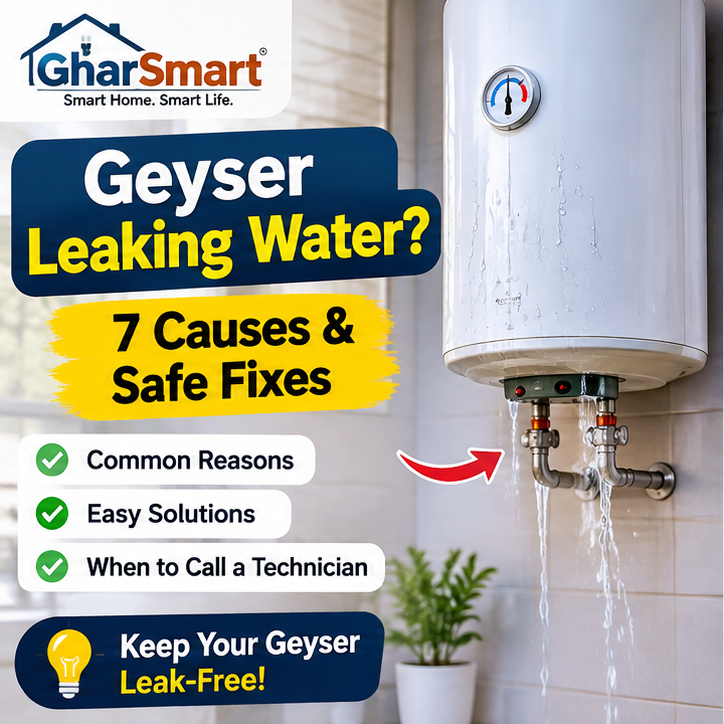
Geyser Leaking Water? 7 Common Causes and How to Fix It
Is your geyser leaking water from the bottom, dripping from a pipe connection, or releasing water through its pressure relief valve? A leaking geyser can happen because of loose plumbing connections, excessive water pressure, a faulty valve, worn seals, or corrosion inside the storage tank. Some leaks may come from external pipe connections, while others can indicate a serious internal problem. Identifying where the water is coming from is the first step toward finding the right solution.
In this guide, we'll explain 7 common reasons why a geyser leaks water, what you should check safely, and when professional repair is necessary.
Important: If water is near electrical components, switch off the geyser's power from a safe, dry location. Never touch wet switches, plugs, or electrical connections.
Why Is My Geyser Leaking Water?
Quick Answer: A geyser may leak because of loose inlet or outlet connections, a damaged pressure relief valve, worn gaskets, excessive water pressure, or corrosion in the storage tank. The correct solution depends on the leak's location and severity.
Geyser Leakage: Quick Troubleshooting Guide
| Where Is the Water Leaking? | Possible Cause |
|---|---|
| Bottom of the geyser | Tank corrosion or internal leakage |
| Inlet pipe connection | Loose connection or worn seal |
| Outlet pipe connection | Damaged washer or fitting |
| Pressure relief valve | Pressure or valve problem |
| Around the heating element cover | Damaged gasket or internal leakage |
| Only during heating | Expansion-related discharge or pressure issue |
| From the tank body | Corrosion or tank damage |
1. Loose Inlet or Outlet Pipe Connections
Loose plumbing connections are a common reason for water leakage around a geyser. The inlet pipe supplies cold water to the geyser, while the outlet pipe carries heated water to the bathroom or kitchen. Over time, connections may loosen because of vibration, installation problems, or worn sealing material.
Possible Signs:
- Water dripping near the inlet pipe.
- Leakage around the outlet connection.
- Moisture around pipe joints.
- Small water drops appearing after the geyser is used.
What to Do:
- Observe the pipe connections from a safe distance.
- Check whether water is coming from a joint or the tank itself.
- Ask a qualified plumber to inspect loose fittings and damaged seals.
Do not tighten hot-water connections while the geyser is operating.
2. Faulty Pressure Relief Valve
A pressure relief valve helps protect a water heater from excessive pressure. Sometimes a small amount of water may discharge during heating because water expands as its temperature increases. However, continuous dripping or heavy water flow should not be ignored.
Possible Causes:
- Faulty pressure relief valve.
- Excessive water pressure.
- Incorrect installation.
- Internal temperature or pressure problems.
What to Do:
- Observe whether water comes from the valve outlet.
- Check whether the discharge is occasional or continuous.
- Contact an authorized technician if the leakage continues.
Never block, cap, or disable a pressure relief valve. It is an important safety component.
3. Damaged Gasket or Rubber Seal
Gaskets and rubber seals help prevent water from escaping through joints and component openings. Over time, these seals can become worn, damaged, or hardened.
Possible Signs:
- Water leaking around a fitting or cover.
- Repeated dripping from the same area.
- Leakage that becomes worse during heating.
Solution:
A technician can inspect the gasket and replace it with a compatible part recommended by the manufacturer. Avoid opening the geyser cover yourself because internal electrical components may be dangerous.
4. Excessive Water Pressure
High water pressure can put additional stress on geyser connections, valves, and internal components. If your geyser leaks more frequently when the water supply is running, pressure-related problems may be responsible.
What to Do:
- Ask a plumber to measure the incoming water pressure.
- Check whether a pressure regulator is required.
- Follow the geyser manufacturer's pressure specifications.
Do not reduce water pressure by blocking safety outlets or modifying the geyser's plumbing.
5. Corrosion Inside the Storage Tank
Corrosion can damage the inner tank of a storage geyser over time. If the tank develops a crack or a corroded section, water may begin leaking from the bottom or outer body.
Warning Signs:
- Continuous water leakage from the tank body.
- Rust-coloured water.
- Visible corrosion around the geyser.
- Repeated leakage despite replacing external fittings.
What to Do:
A damaged storage tank generally requires professional assessment. Depending on the condition and model, replacing the geyser may be more practical than repairing the tank.
6. Leakage Around the Heating Element Area
Some electric storage geysers have heating elements fitted through a sealed opening. If the seal or gasket becomes damaged, water may escape from the heating element area.
Possible Signs:
- Moisture around the lower cover.
- Water dripping from the bottom section.
- Leakage that continues after the geyser is switched off.
Do not remove the cover or attempt to tighten internal components. Disconnect the appliance safely and arrange professional inspection.
7. Water Appearing Only During Heating
Sometimes homeowners notice water dripping only when the geyser is heating. This may be related to normal water expansion, pressure relief valve operation, or an underlying pressure-control problem.
A small discharge from a properly installed relief outlet may be expected in some models. However, persistent dripping, heavy flow, or unusual leakage needs inspection. Follow the manufacturer's instructions for your specific geyser.
What Should You Do Immediately If Your Geyser Starts Leaking?
Follow these safety steps:
- Keep children away from the leaking area.
- If water is near electrical components, do not touch the geyser, plug, or wet switch.
- Switch off the power from a safe, dry location if possible.
- If the water supply can be isolated safely, ask a plumber or technician to shut it off.
- Do not open the geyser cover.
- Contact an authorized service technician.
If you notice sparks, smoke, or a burning smell, stay away from the appliance and arrange urgent professional assistance.
Can a Leaking Geyser Be Repaired?
Yes, some geyser leaks can be repaired. The repair depends on the source of leakage:
| Problem | Possible Repair |
|---|---|
| Loose pipe connection | Tightening or replacing fittings |
| Damaged washer | Replacing the seal |
| Faulty pressure valve | Replacing the valve |
| Damaged gasket | Replacing the gasket |
| Corroded tank | Often requires geyser replacement |
Always consider the appliance's age, warranty, condition, and repair cost before deciding.
When Should You Replace a Leaking Geyser?
Consider replacement when:
- The storage tank is corroded or damaged.
- Leakage continues after professional repairs.
- The geyser is old and has repeated problems.
- Repair costs are close to the cost of a new appliance.
- The manufacturer or technician recommends replacement.
If you are planning to replace an old geyser, read our guide: Best Geyser Under ₹10,000 in India.
Related Geyser Troubleshooting Guides
Different geyser problems may have different causes. Explore these related guides:
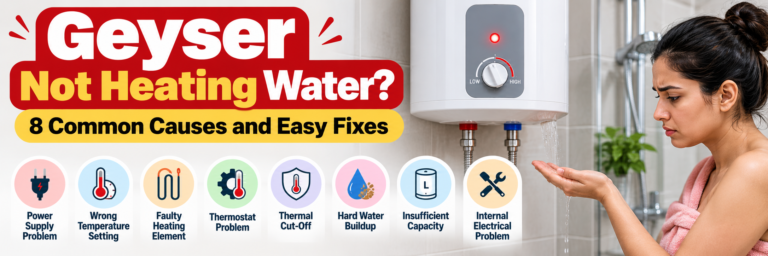
- Geyser Not Heating Water? 8 Common Causes and Easy Fixes
- Geyser Water Not Staying Hot? Causes and Solutions
- Geyser Making Noise? Common Causes and Solutions
Frequently Asked Questions
Why is my geyser leaking water from the bottom?
Water leaking from the bottom may indicate a damaged gasket, internal connection, heating element seal, or corroded storage tank. A technician should identify the exact source.
Is it normal for a geyser to drip water?
A small amount of discharge from a pressure relief outlet may occur during heating in some models. Continuous dripping or water coming from the tank body is not normal and needs inspection.
Can I use a geyser if it is leaking?
It is safer to stop using a leaking geyser until the cause is identified. If water is near electrical components, avoid touching the appliance and switch off power only from a safe, dry location.
Why does my geyser leak only when heating?
Water expansion during heating may cause discharge through the pressure relief system. A faulty valve, excessive pressure, or another internal issue may also be responsible.
Can a leaking geyser be repaired?
Yes. External connections, seals, and certain valves may be repairable. A severely corroded or damaged tank may require replacement.
How do I stop my geyser from leaking?
The correct solution depends on the source. A plumber or authorized technician should inspect the pipes, pressure valve, seals, and tank before recommending a repair.
Final Thoughts
A leaking geyser should never be ignored. While loose pipe connections and worn seals may be relatively simple problems, leakage from the storage tank or near electrical components can be serious. Identify the location of the leak without opening the appliance, switch off the power safely when necessary, and arrange professional inspection. Regular maintenance and timely repairs can help prevent bigger problems and keep your water heater working safely.