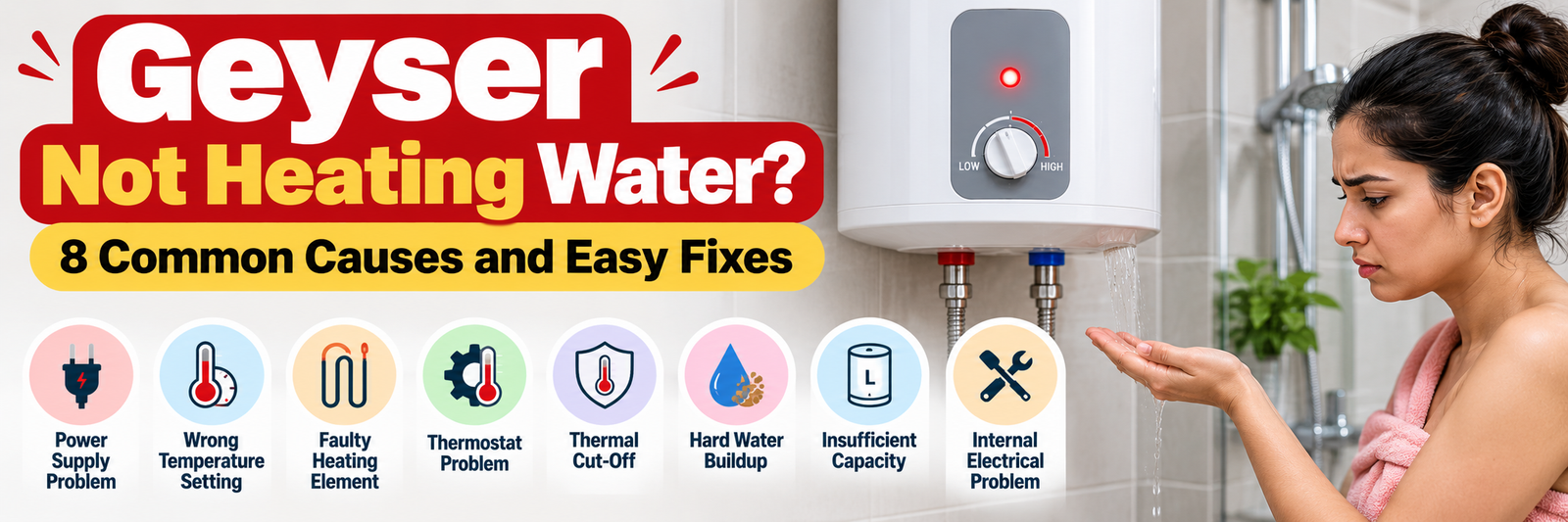
Geyser Not Heating Water? 8 Common Causes and Easy Fixes
Is your geyser not heating water, even though the power light is on? Or is your geyser taking too long to heat water?
An electric geyser may stop heating because of a power supply problem, incorrect temperature setting, faulty thermostat, damaged heating element, thermal safety cut-off, or mineral buildup.
Some basic checks can be performed safely at home. However, because an electric geyser combines electricity, hot water, and plumbing, internal repairs should always be handled by a qualified professional.
In this guide, we'll explain 8 common reasons why a geyser is not heating water, what you can safely check, and when professional repair may be necessary.
Important: This guide mainly covers electric storage and instant water heaters. Gas geysers have different components and safety requirements.
Why Is My Geyser Not Heating Water?
Quick Answer: An electric geyser may stop heating because of an interrupted power supply, incorrect temperature setting, faulty thermostat, damaged heating element, activated thermal safety cut-off, or an internal electrical fault. Start by checking the external power supply and user-accessible settings. If the power light is on but the water remains cold, professional inspection may be required.
Geyser Not Heating: Quick Troubleshooting Guide
| Problem | Possible Cause | What to Check |
|---|---|---|
| No power light | Power supply problem | External switch and circuit breaker |
| Light on but water cold | Heating element or thermostat | Professional inspection |
| Water only lukewarm | Setting or high demand | Temperature and capacity |
| Heating takes too long | Mineral buildup/component issue | Maintenance |
| Heating stops repeatedly | Thermal safety cut-off | Professional inspection |
| Breaker keeps tripping | Electrical fault | Stop using the geyser |
| Water leaking | Tank/plumbing problem | Stop use and arrange inspection |
| Hot water runs out quickly | Insufficient capacity | Usage and geyser size |
1. Check the Geyser Power Supply
The first thing to check when an electric geyser is not heating water is the power supply. A tripped circuit breaker, faulty external switch, or interrupted electricity supply may prevent the appliance from heating.
What to Do
Check whether:
- Electricity is available.
- The geyser's external power switch is on.
- The circuit breaker has tripped.
- There is visible damage around the external switch or wiring.
If the circuit breaker repeatedly trips, don't keep resetting it. Switch off the geyser and contact a qualified electrician or authorized service technician. Never touch electrical switches with wet hands.
2. Check the Temperature Setting
Some electric geysers allow users to adjust the water temperature. If the setting is too low, the geyser may appear to work normally while producing only lukewarm water.
What to Do
- Check the user-accessible temperature controls described in your geyser's manual.
- Use the manufacturer's recommended settings.
- Don't open the appliance housing to access internal thermostat controls.
- Avoid unnecessarily high temperatures because very hot water can cause burns.
3. Faulty Heating Element
The heating element heats the water inside an electric geyser. If it fails, the geyser may receive electricity but still produce cold water. This is one possible explanation when the geyser light is on but water is not hot.
Possible Signs
- Power indicator is on but water remains cold.
- Water takes much longer to heat.
- Heating performance has suddenly deteriorated.
- The geyser doesn't reach the expected temperature.
These symptoms don't prove that the heating element has failed because other problems can produce similar symptoms.
What to Do
- Contact an authorized service center or qualified technician.
- Don't attempt to test or replace the heating element yourself.
4. Faulty Thermostat
The thermostat regulates the water temperature and controls heating. A faulty thermostat may cause inconsistent heating or prevent the geyser from reaching its intended temperature.
What to Do
- Check only controls intended for normal user operation.
- If changing the accessible temperature setting doesn't solve the problem, arrange professional inspection.
- Never bypass a thermostat or thermal safety device.
5. Thermal Safety Cut-Off Has Activated
Many electric water heaters contain thermal protection designed to interrupt heating when unsafe conditions are detected. If this protection activates, your geyser may stop heating. Possible underlying causes can include excessive temperature, thermostat problems, heating-element issues, or another internal fault.
What to Do
- Follow the troubleshooting procedure for your exact model.
- Don't repeatedly reset a safety device that continues to activate.
- Repeated activation needs professional investigation.
6. Hard Water and Mineral Buildup
Hard water can contribute to mineral deposits inside storage water heaters. Over time, these deposits may affect heating performance and increase maintenance requirements.
Possible Signs
- Heating takes longer than before.
- Heating performance has decreased.
- The appliance develops unusual sounds.
- More frequent servicing becomes necessary.
What to Do
- Follow the manufacturer's maintenance recommendations.
- Have professional descaling or internal servicing performed when necessary.
- Never pour household acids or cleaning chemicals into the geyser unless specifically instructed by its manufacturer.
7. Geyser Capacity Is Too Small
Sometimes the geyser is working normally but cannot provide enough hot water for the household. For example, a small storage geyser may run out of hot water during consecutive showers.
What to Consider
Think about:
- Number of people using hot water
- Bathing habits
- Storage capacity
- Water flow
- Frequency of hot-water use
If your current geyser regularly fails to meet household demand, you may need a different capacity.
Planning to replace your old geyser? Read our Best Geyser Under ₹10,000 in India buying guide to compare suitable 15L and 25L storage water heaters and important features to check before buying.
8. Internal Wiring or Electrical Problems
Internal electrical problems can prevent the geyser from heating even when power appears to be available.
Warning Signs
Stop using the geyser if you notice:
- Burning smell
- Sparks
- Smoke
- Repeated breaker trips
- Water near electrical components
- Unusual electrical sounds
Switch off the electrical supply if it is safe to do so and arrange professional inspection.
Why Is My Geyser Light On but Water Not Hot?
A glowing indicator may show that power is reaching part of the appliance, but it does not necessarily mean the heating element is working correctly.
Possible causes include:
- Heating-element failure
- Thermostat problem
- Thermal cut-off
- Internal electrical fault
- Incorrect temperature setting
Allow the geyser the heating time recommended by its manufacturer. If the water remains cold, arrange professional inspection.
Why Is My Geyser Taking Too Long to Heat?
Heating time depends on tank capacity, heating power, incoming water temperature, temperature setting, and design. If your geyser suddenly takes much longer than before, mineral deposits or a component problem may be responsible.
How to Maintain an Electric Geyser
- Follow the manufacturer's instructions.
- Arrange recommended servicing.
- Watch for water leakage.
- Don't ignore repeated breaker trips.
- Avoid unnecessarily high temperature settings.
- Follow appropriate maintenance in hard-water areas.
- Never bypass safety devices.
- Use qualified professionals for electrical repairs.
Should You Repair or Replace Your Geyser?
A geyser that isn't heating doesn't automatically need replacement.
Consider:
- Appliance age
- Warranty status
- Repair cost
- Tank condition
- Frequency of previous faults
- Availability of parts
- Household hot-water requirements
If repair costs are becoming high or the current capacity no longer suits your family, compare replacement models in our Best Geyser Under ₹10,000 in India guide.
Frequently Asked Questions
Why is my geyser not heating water?
Power supply problems, thermostat faults, heating-element failure, thermal protection, or other internal faults may prevent an electric geyser from heating.
Why is my geyser light on but water is cold?
The indicator may show that power is reaching the appliance, but the heating element or thermostat could still have a fault.
Why is my geyser taking too long to heat?
Capacity, incoming water temperature, mineral buildup, settings, or component problems can affect heating time.
Can hard water affect a geyser?
Yes. Hard water can contribute to mineral buildup in storage water heaters and increase maintenance requirements.
Can a faulty thermostat stop a geyser from heating?
Yes. A thermostat fault can interfere with normal temperature control.
Why does my geyser circuit breaker keep tripping?
Repeated tripping can indicate an electrical problem. Stop using the appliance and arrange qualified inspection.
Should I repair or replace an old geyser?
Compare the appliance's age, condition, repair cost, warranty, capacity, and replacement cost before deciding.
Final Thoughts
A geyser not heating water can result from something as simple as a power or temperature-setting problem or from a faulty heating element, thermostat, or electrical component. Start with safe external checks and follow the instructions for your exact model. If the geyser light is on but water remains cold, the breaker repeatedly trips, or you notice leakage, sparks, or a burning smell, stop using the appliance and seek professional assistance. If replacement makes more financial sense, our Best Geyser Under ₹10,000 guide can help you understand the important features to compare.