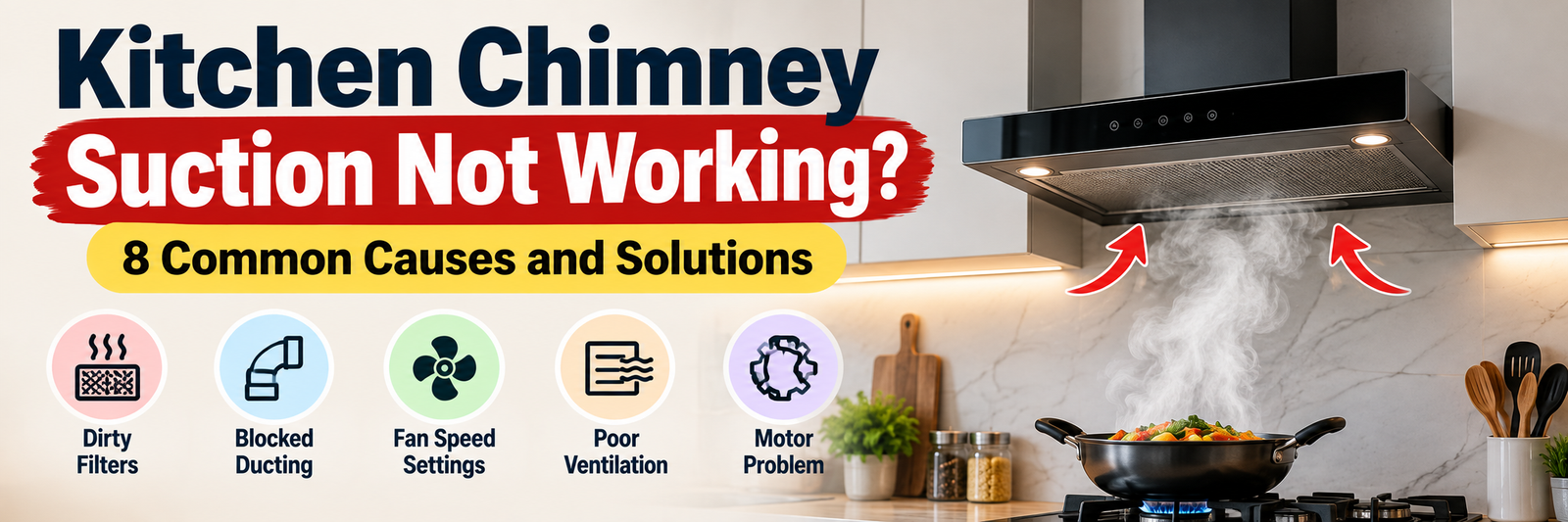
Kitchen Chimney Suction Not Working? 8 Common Causes and Solutions
Is your kitchen chimney suction not working properly, even when the fan is running at full speed? A kitchen chimney helps remove cooking fumes, airborne grease and odours. When its suction becomes weak, smoke and cooking smells may remain in your kitchen. The problem can occur because of dirty filters, blocked ducting, incorrect fan settings or mechanical faults. In this guide, we'll explain eight possible reasons for poor kitchen chimney suction, safe troubleshooting steps and ways to maintain your appliance.
Why Is My Kitchen Chimney Suction Weak?
Quick Answer: Kitchen chimney suction may become weak because of clogged grease filters, blocked ducting, restricted airflow, incorrect settings or a faulty blower. Start by checking the filters and accessible airflow openings. If the fan is not running correctly or the problem continues after cleaning, arrange professional inspection.
Kitchen Chimney Suction Problems: Quick Troubleshooting
| Problem | Possible Cause | Recommended Action |
|---|---|---|
| Weak suction | Dirty grease filters | Clean according to the manual |
| Fan running but poor airflow | Duct obstruction | Arrange duct inspection |
| Chimney unusually noisy | Blower or mounting problem | Seek professional inspection |
| Poor smoke capture | Incorrect installation or size | Review installation requirements |
| Suction suddenly reduced | Fan or motor problem | Contact authorized service |
| Odours remain in ductless model | Saturated charcoal filter | Replace if required |
1. Dirty or Clogged Chimney Filters
Grease filters capture airborne oil particles released during cooking. Over time, accumulated grease can restrict airflow and reduce suction performance. This is especially relevant in kitchens where frying and high-temperature cooking are frequent.
How to Fix It
- Switch off the chimney and disconnect the power supply before maintenance.
- Allow the appliance to cool.
- Remove and clean the grease filters only according to the manufacturer's instructions.
- Some metal filters are washable, while other filter types have different maintenance requirements.
- Never operate the chimney without its required filters unless the manufacturer explicitly permits it.
2. Blocked or Restricted Ducting
Ducted kitchen chimneys release extracted air outdoors through a duct. Grease deposits, debris, excessive bends or poorly installed ducting can restrict airflow. Even a powerful chimney may perform poorly when its ducting is unsuitable.
How to Fix It
- Check accessible external duct outlets for visible obstructions without dismantling electrical components.
- If you suspect a blockage inside the duct, arrange professional cleaning or inspection.
- Do not insert sharp tools into the duct or attempt to reach a running fan.
3. Incorrect Fan Speed Settings
Some chimney models offer multiple fan speeds. Using a low setting during heavy frying may not provide enough airflow to capture cooking fumes effectively.
How to Fix It
- Choose an appropriate fan speed for your cooking activity.
- Follow the manufacturer's recommendations for operating the chimney before, during and after cooking.
- If changing the fan speed has no effect, there may be a control or blower problem.
4. Poor Kitchen Ventilation
A ducted chimney needs an appropriate supply of replacement air. In a tightly sealed kitchen, insufficient incoming air can affect extraction performance. Strong cross-drafts may also carry cooking fumes away from the chimney before they can be captured.
How to Fix It
- Follow the manufacturer's ventilation and installation requirements.
- Ensure that ventilation arrangements comply with local building and appliance safety requirements.
- Avoid placing powerful fans where they blow cooking fumes away from the chimney.
5. Incorrect Chimney Size or Installation
A chimney that is too narrow for the cooking area may struggle to capture fumes effectively. Mounting height, duct diameter, duct length and the position of the hob also influence performance. A higher advertised suction rating does not automatically compensate for poor installation.
How to Fix It
- Check the manufacturer's recommended installation height and duct specifications.
- Have an installer inspect the appliance if you suspect incorrect positioning.
- If you are planning to replace the appliance, read our How to Choose a Kitchen Chimney for Indian Cooking guide.
- It explains chimney sizes, suction ratings, filters and installation considerations.
6. Saturated Charcoal Filters
Ductless chimneys typically use charcoal filters to reduce certain cooking odours. These filters become less effective as they absorb contaminants. Charcoal filters usually require periodic replacement rather than ordinary washing, although maintenance instructions vary by model.
How to Fix It
- Check whether your chimney uses a charcoal filter.
- Follow the manufacturer's replacement schedule and purchase compatible filters.
- Remember that ductless chimneys recirculate air rather than exhausting cooking fumes outdoors.
7. Faulty Chimney Blower or Motor
A damaged blower, motor or fan component may reduce suction. Possible warning signs include unusual noises, inconsistent fan speed or a fan that fails to rotate.
How to Fix It
- Switch off the chimney if it makes abnormal mechanical noises.
- Do not attempt to reach the blower or repair internal electrical components.
- Contact an authorized service centre for inspection.
8. Grease Buildup Inside the Chimney
Cleaning visible filters does not necessarily remove grease accumulated in other parts of the chimney. Internal grease buildup can affect performance and may create a fire hazard.
How to Fix It
- Follow the manufacturer's recommended maintenance schedule.
- Arrange professional servicing when internal cleaning is required.
- An auto-clean function does not eliminate every maintenance requirement.
How to Improve Kitchen Chimney Suction
Follow these practical maintenance habits:
- Clean washable filters according to the manual.
- Replace charcoal filters when required.
- Use an appropriate fan speed.
- Keep accessible air openings unobstructed.
- Follow the recommended installation specifications.
- Arrange periodic professional maintenance.
- Stop using the chimney if its motor behaves abnormally.
When Should You Replace Your Kitchen Chimney?
Professional repair may be appropriate when the chimney has a replaceable fan, switch or other serviceable component. Replacement may be worth considering if the appliance is incorrectly sized, has repeated mechanical faults or requires expensive repairs. Before buying another model, compare chimney width, ducting requirements, maintenance needs and warranty support. Our kitchen chimney buying guide covers these considerations in detail.
Buying option: Explore kitchen chimneys on Amazon India.
Affiliate disclosure: This article may contain affiliate links. If you purchase through a qualifying affiliate link, GharSmart may earn a commission at no additional cost to you.
Frequently Asked Questions
Why is my kitchen chimney running but not sucking air?
Clogged filters, blocked ducting, restricted ventilation or blower problems may reduce airflow even when the fan is running.
How do I increase kitchen chimney suction?
Clean the filters, use the appropriate fan speed and check the manufacturer's installation requirements. Seek professional help if the problem continues.
Does an auto-clean chimney need maintenance?
Yes. Auto-clean functions do not eliminate the need for all filter, duct and internal maintenance.
Can blocked ducting reduce chimney suction?
Yes. Restrictions in the exhaust duct can significantly affect airflow.
How often should I clean kitchen chimney filters?
The appropriate cleaning interval depends on the filter design, cooking frequency and manufacturer. Follow the maintenance schedule for your specific model.
Should I repair or replace a chimney with weak suction?
The decision depends on the cause, repair cost, age, warranty and suitability of the current installation.Final Thoughts
Poor kitchen chimney suction is often associated with airflow restrictions, filter maintenance or installation problems. Start with manufacturer-approved cleaning and simple external checks. If the chimney continues to perform poorly or its fan behaves abnormally, arrange professional inspection rather than attempting internal repairs.