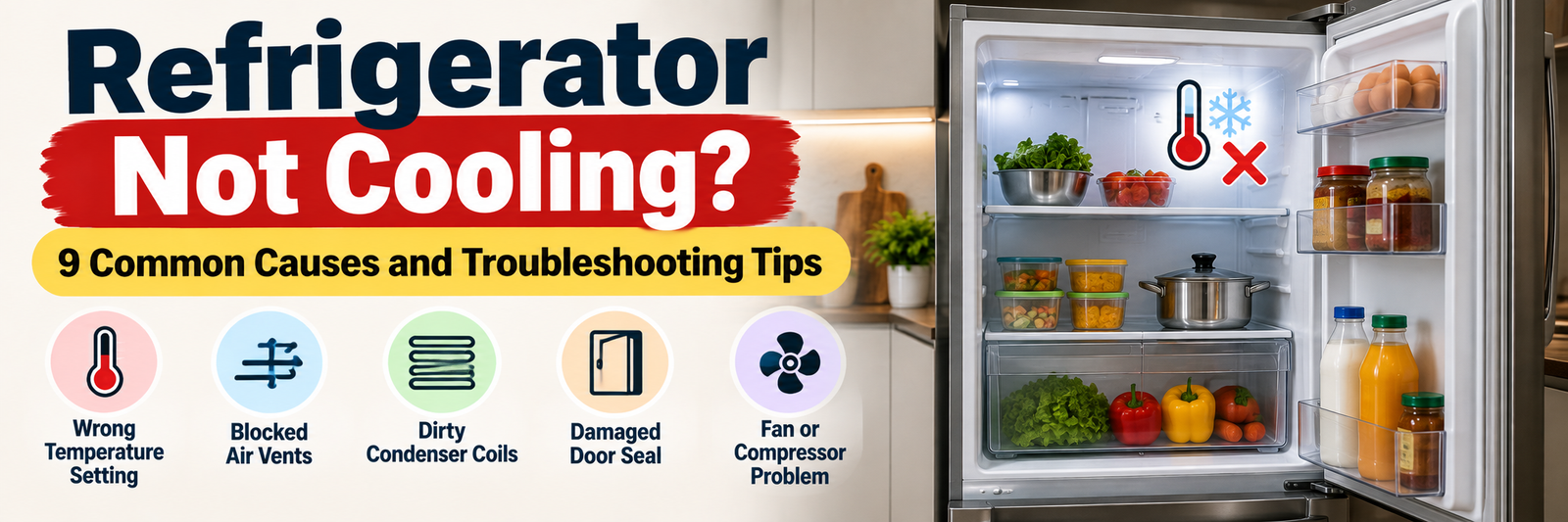
Refrigerator Not Cooling? 9 Common Causes and Troubleshooting Tips
Is your refrigerator not cooling properly, even though the light and compressor appear to be working? A refrigerator that fails to maintain the correct temperature can cause food to spoil and increase electricity consumption. Dirty condenser coils, blocked air vents, damaged door seals and incorrect temperature settings are some possible causes. Other problems, including compressor or refrigerant-system faults, require professional repair.
This guide explains nine common reasons why a refrigerator stops cooling, safe checks you can perform and when to contact a technician.
Why Is My Refrigerator Not Cooling?
Quick Answer: A refrigerator may stop cooling because of incorrect temperature settings, blocked air vents, dirty condenser coils, damaged door seals or faulty cooling components. Start by checking the power supply, temperature settings and airflow. If the refrigerator still cannot maintain a safe temperature, arrange professional inspection.
Food safety note: Keep refrigerator temperatures at or below 4°C and freezer temperatures at or below −18°C. Use an appliance thermometer to verify temperatures. If perishable food has been above 4°C for more than two hours, it generally needs to be discarded.
Refrigerator Not Cooling: Quick Troubleshooting Guide
| Symptom | Possible Cause | What to Check |
|---|---|---|
| Light works but cooling is weak | Airflow or cooling problem | Temperature and air vents |
| Fridge runs continuously | Door seal or cooling issue | Door closure and ventilation |
| Freezer works but fridge is warm | Air circulation problem | Internal vents |
| Refrigerator completely off | Power supply problem | Socket and circuit breaker |
| Water or ice buildup | Door seal or defrost problem | Gaskets and visible frost |
| Compressor repeatedly clicks | Electrical or compressor fault | Professional inspection |
1. Incorrect Temperature Settings
An incorrect thermostat setting may cause insufficient cooling. Some refrigerators also have holiday, energy-saving or other operating modes that affect temperature.
How to Fix It
- Check the recommended settings in your refrigerator's user manual.
- Use a refrigerator thermometer to confirm the actual internal temperature.
- Allow sufficient time for the appliance to stabilize after adjusting its settings.
- Avoid repeatedly changing the thermostat before the temperature has had time to respond.
2. Blocked Refrigerator Air Vents
Many refrigerators use internal air passages to distribute cold air between compartments. When food containers block these vents, some areas may become warmer than others.
How to Fix It
- Locate the air vents described in your refrigerator's manual.
- Move food containers away from the openings.
- Avoid overpacking the compartments, as adequate air circulation is important for consistent cooling.
3. Dirty Condenser Coils
Some refrigerators have accessible condenser coils that can accumulate dust. Excessive dust may reduce heat transfer and affect cooling efficiency. However, not every refrigerator has user-accessible condenser coils.
How to Fix It
- Unplug the refrigerator before performing manufacturer-approved maintenance.
- Follow the instructions for your specific model.
- Do not remove electrical covers or attempt to access sealed refrigeration components.
- If the coils are inaccessible, arrange professional maintenance when necessary.
4. Damaged Refrigerator Door Seal
The door gasket helps keep warm air from entering the refrigerator. A damaged, dirty or poorly fitted gasket can allow warm air inside, increasing the cooling workload.
How to Fix It
- Inspect the gasket for visible cracks, dirt or deformation.
- Clean it according to the manufacturer's instructions.
- Check whether food containers or shelves are preventing the door from closing properly.
- If the gasket is damaged, arrange replacement with a compatible part.
5. Insufficient Ventilation Around the Refrigerator
Refrigerators release heat into the surrounding environment. Insufficient clearance around the appliance can interfere with heat dissipation. This is particularly relevant when a refrigerator is installed inside a tightly enclosed cabinet.
How to Fix It
- Check the manufacturer's recommended clearance requirements.
- Keep the ventilation areas unobstructed.
- Avoid placing the refrigerator near heat sources unless its installation instructions permit it.
6. Frost or Defrost System Problems
Excessive frost buildup can interfere with airflow in some refrigerator designs. A faulty defrost heater, sensor or other defrost component may contribute to this problem.
How to Fix It
- Check the manufacturer's instructions for dealing with visible frost.
- Do not use sharp objects, open flames or unsuitable heating devices to remove ice.
- If excessive frost repeatedly returns, arrange professional inspection.
7. Evaporator Fan Problems
Many frost-free refrigerators use an evaporator fan to circulate cold air. If the fan fails, cooling may become uneven. In some designs, the freezer may remain cold while the refrigerator compartment becomes warm.
How to Fix It
- Check for unusual noises and airflow problems without removing internal electrical panels.
- If you suspect a fan fault, contact an authorized technician.
8. Compressor or Start Component Problems
The compressor circulates refrigerant through the cooling system. A faulty compressor or associated electrical component may prevent the refrigerator from cooling. Warning signs may include repeated clicking, abnormal operating noises or a complete loss of cooling.
How to Fix It
- Do not attempt to repair the compressor or its electrical components yourself.
- Arrange professional diagnosis.
- If the refrigerator is covered by warranty, contact the manufacturer before arranging third-party repairs.
9. Refrigerant-System Problems
A sealed refrigeration-system fault can prevent a refrigerator from maintaining its temperature. These problems require specialized equipment and qualified technicians. Never attempt to open, puncture or refill the sealed refrigeration system yourself.
What If the Freezer Works but the Refrigerator Is Not Cooling?
If your freezer appears cold but the refrigerator compartment is warm, restricted airflow may be one possible explanation. Blocked internal vents, excessive frost or an evaporator fan problem can interfere with cold-air distribution. Start by checking accessible vents and the manufacturer's recommended settings. If the problem continues, arrange professional inspection.
How to Prevent Refrigerator Cooling Problems
Follow these maintenance habits:
- Keep internal air vents clear.
- Avoid overloading the compartments.
- Check that the doors close properly.
- Clean the door gaskets regularly.
- Follow the manufacturer's ventilation requirements.
- Use an appliance thermometer.
- Arrange servicing when you notice repeated cooling problems.
Should You Repair or Replace Your Refrigerator?
Consider the refrigerator's age, warranty, energy consumption and estimated repair cost. Minor problems involving door seals or replaceable components may be economical to repair. A major compressor or sealed-system failure may require a more detailed cost comparison.
Buying option: Explore refrigerators for small families on Amazon India.
Affiliate disclosure: GharSmart may earn a commission from qualifying purchases made through affiliate links, at no additional cost to you.
Frequently Asked Questions
Why is my refrigerator running but not cooling?
Possible causes include blocked airflow, incorrect temperature settings, dirty condenser coils or cooling-system faults.
Why is my freezer cold but my fridge warm?
Restricted airflow, excessive frost or an evaporator fan problem may affect cooling in the refrigerator compartment.
Can a damaged door seal affect refrigerator cooling?
Yes. A damaged gasket can allow warm air to enter, making it harder for the refrigerator to maintain its temperature.
How long should I wait after changing the refrigerator temperature?
Follow your manufacturer's instructions. Temperature changes may take several hours to stabilize, depending on the model and operating conditions.
Can I repair a refrigerator compressor myself?
No. Compressor and sealed refrigeration-system repairs require appropriate technical qualifications and equipment.
What temperature should my refrigerator maintain?
Keep the refrigerator at or below 4°C and the freezer at or below −18°C. Verify the temperature with an appliance thermometer.
Final Thoughts
A refrigerator not cooling properly may have a simple airflow or temperature-setting problem, but some faults require professional repair. Begin with safe external checks and monitor the actual temperature. Protect perishable food, follow your refrigerator's instruction manual and seek professional assistance when basic troubleshooting does not resolve the problem.